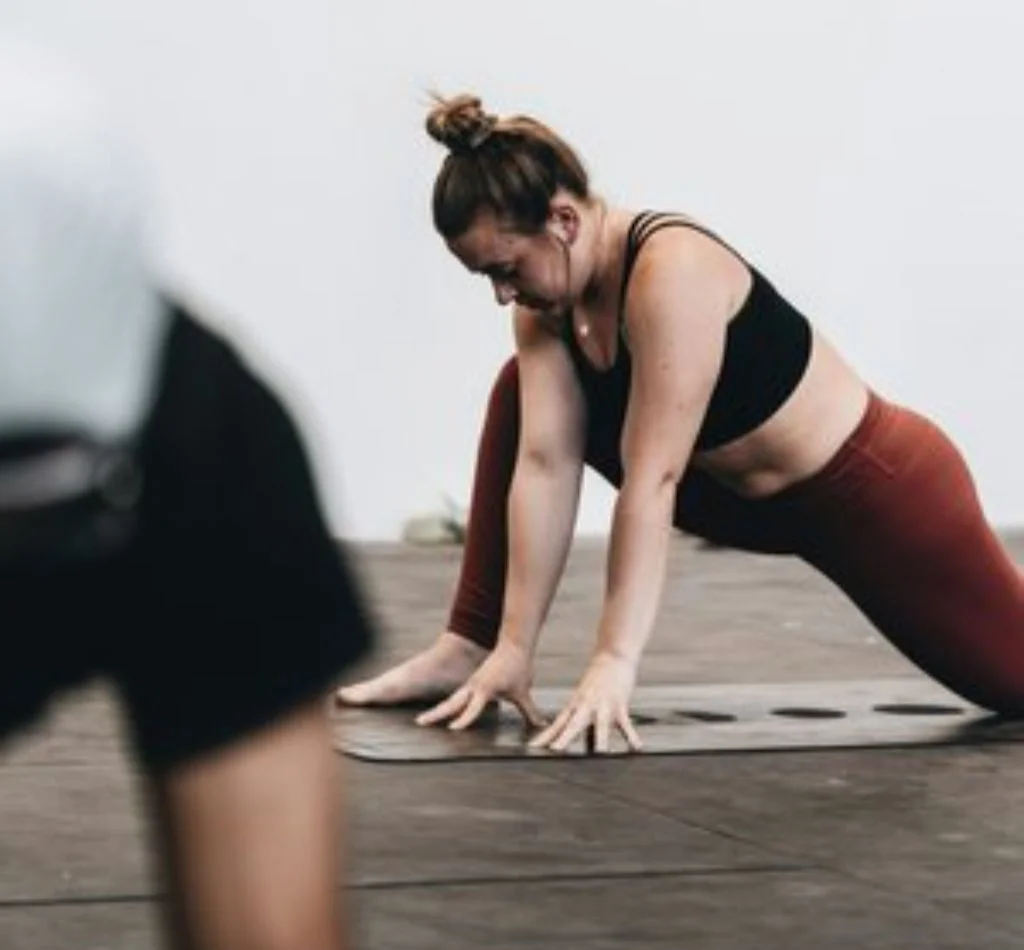
If you’re hypermobile and your hips constantly feel tight—especially the front (hip flexors) and back (hamstrings)—you’re not alone. It’s one of the most common complaints I hear from clients. Often, they’ve been told by well-meaning trainers or instructors to just keep stretching… but instead of getting relief, they either feel the same or worse.
Here’s the twist: when I assess their hip mobility, they typically have incredible range of motion—think ballet-dancer levels. In fact, I’ve rarely met a hypermobile person whose hips are genuinely stiff. So why all the tension?
Stretchy Doesn’t Always Mean Strong
Here’s where things get interesting. When your body tells you a muscle feels “tight,” that doesn’t always mean it needs to be stretched. Especially for folks with hypermobility, those tight-feeling hip flexors and hamstrings are often already long—and working overtime.
A classic hypermobile standing posture tends to involve:
- Knees that lock backwards (which lengthens your hamstrings)
- Hips pushed forward (lengthening the hip flexors)
- A tilted pelvis (further stretching those same muscles).
This positioning makes it tough for your core and glutes to do their jobs as the main stabilizers of your hips and spine. So, your hip flexors and hamstrings jump in to help—even though they’re not designed for that role. It’s like asking a highly skilled accountant to run the HR department… using an ancient computer and a painfully slow internet connection. Cue frustration, fatigue, and yes, that tight feeling.
So What Can Help?
When muscles feel tight because they’re overworked and under-supported, our goal shifts: instead of stretching more, we focus on offloading those muscles, putting the body in better alignment, and building real strength.
1. Offload Overworked Muscles
We start by re-training your stabilizers—like your deep core, glutes, adductors, and even your feet—to do their jobs. Sometimes that means going back to fundamental exercises and re-learning how to activate muscles you’ve skipped over. (Not glamorous, but so worth it.) It may also mean checking in on other body parts – like your diaphragm or foot mechanics – that quietly impact your hip stability.
2. Find a Better Position
Once your stabilizers are online, we can begin training your body to hold a more neutral, supported posture. When the joints are better aligned, the right muscles (like your glutes) are more mechanically able to help. That means less strain on the ones that are already doing too much.
3. Build Strength + Reset the “Tight” Message
Muscles that are always “on” need to learn how to relax before they can truly get stronger. That’s where things like massage, self-myofascial release, or hands-on therapy can help. Once the muscle can chill, we build it back up—so it can work hard when needed and actually rest when it’s not.
If your hips feel tight no matter how much you stretch, it might be time to zoom out and look at the bigger picture. By shifting the focus from flexibility to function, you can create more support, ease, and stability in your body—step by step.
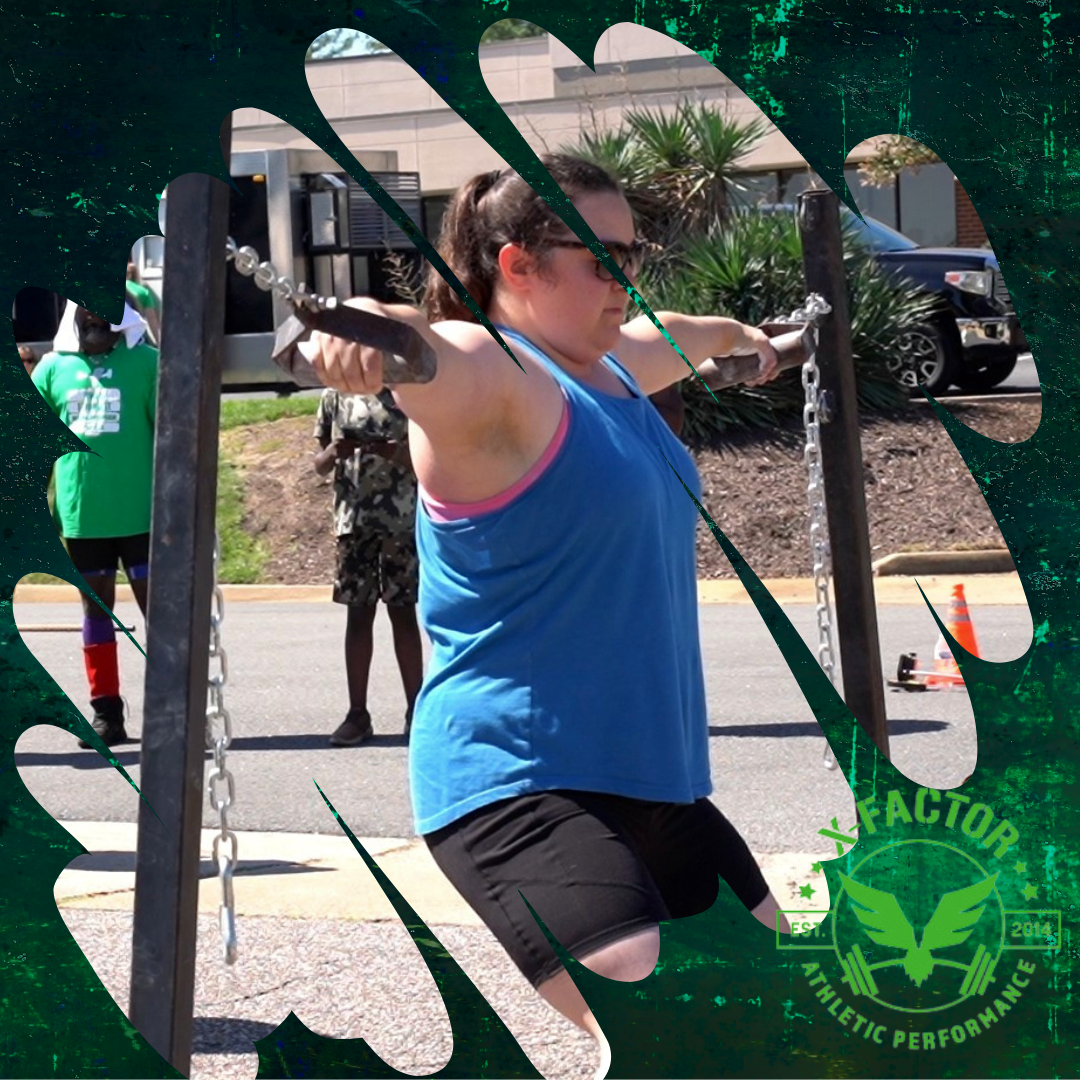
There’s Renee, one of my X-Factor athletes-
—a dynamo powerlifter whose deadlift will make you drool. She’s a skilled lifter now, but that wasn’t always the case. She was missing key pieces: pelvic floor engagement, breath, spine position.
Together, working with her coach, we built a new foundation. She found her groove, her strength, her confidence. Now she’s competing for national records—and loving every minute of it.
And then there’s the former Marine/retired cable company technician—a man whose body tells the story of service, adventure, and resilience. Years of crawling through mud, jungles, attics, and basements, along with mountain biking, paddling, and hiking, have taken their toll. We are his home away from home, his place to come and play, albeit with heavy monitoring to protect those sensitive tissues!
We help keep him moving—not perfectly, but purposefully—so he can keep doing what makes him feel alive.
For him, movement is therapy. For Renee, it’s joy. For me, it’s both.
The Power of Community
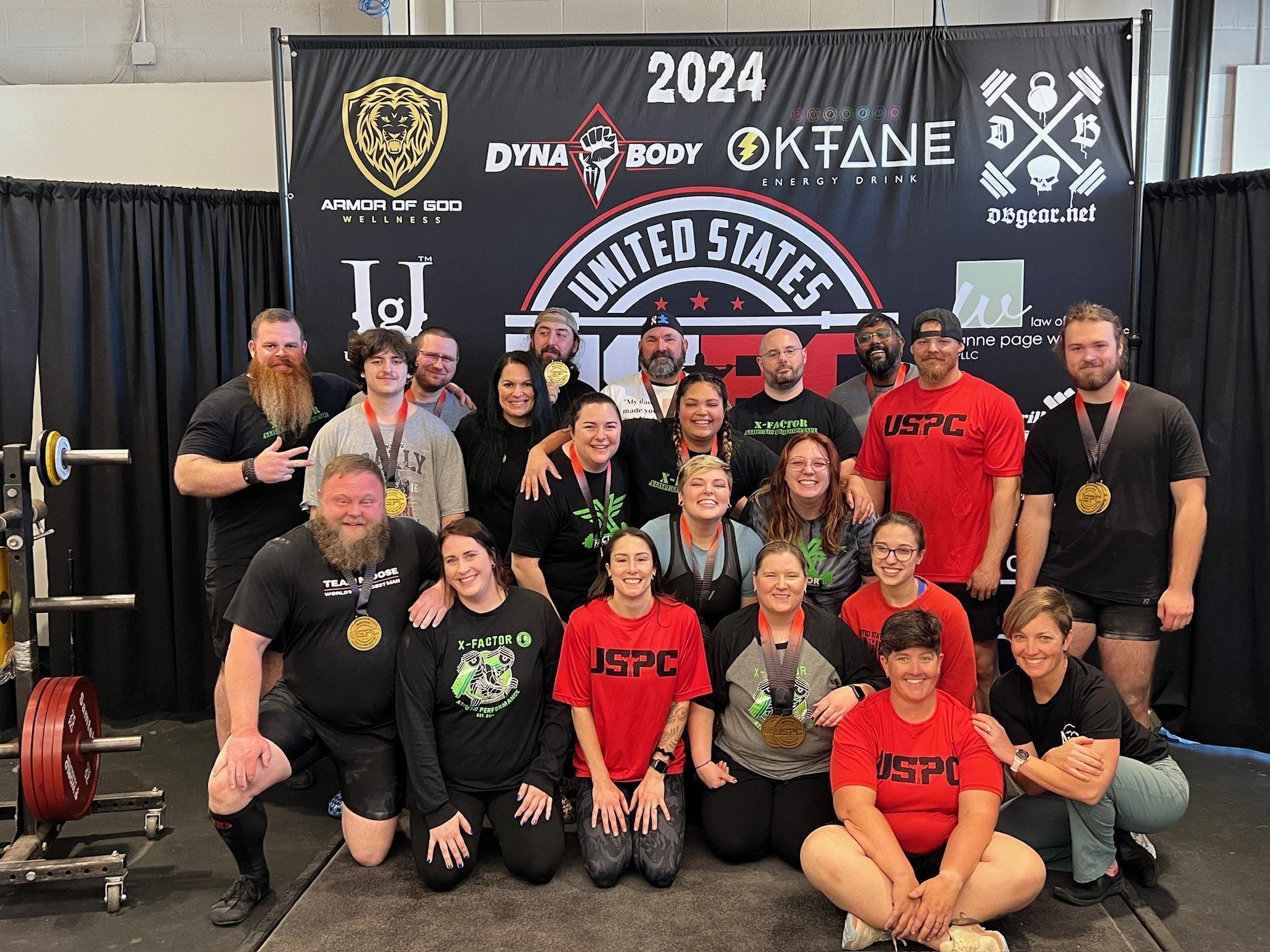
Our partnership with X-Factor has been one of the greatest gifts of these five years—
not just as a referral source, but because it immerses us in a community that genuinely shows up for one another.
Your content goes here. Edit or remove this text inline or in the module Content settings. You can also style every aspect of this content in the module Design settings and even apply
When you’re surrounded by people who celebrate each other’s wins, who show up when someone struggles, cynicism doesn’t stand a chance. It’s de-cynicizing.
Another experience that has deeply influenced me is our partnership with Peak Experiences. Each month, I meet with their route setters for wellness check-ins—an opportunity to make sure the people who quite literally build the climbing experience are taking care of their own bodies, too. It’s become one of my favorite parts of the job. We talk through movement patterns, recovery strategies, and the demands of setting, which can be as intense as any athletic pursuit. Those sessions have built trust and camaraderie, and they remind me that movement—and caring for the people who create it—is at the heart of everything Ascend stands for.
That same lesson came to life through Allison, our office manager and the heartbeat of Ascend. I first met her years ago when I was a personal trainer, and she stood out—not because of her workouts, but because of her consistency as a human being.
No matter how hard life gets, she can be found volunteering at food banks, showing up for her kids at school, and following through on every single thing she said she’d do. She’d text to ask how an event went, remember small details, or just check in to say, “Hey, how are you doing after that tough week?”
She’s humble about it—she’ll tell you, “I don’t know, I just do stuff.”
But she does stuff differently.
She models what genuine connection looks like. It’s not about grand gestures; it’s about presence. About remembering, about following up, about caring enough to ask the next question.
When I brought her on as my office manager, I didn’t just gain a teammate—I gained a partner in the kind of culture Ascend stands for. Allison embodies what we all need more of in this world: people who show up.
Watching her invest in her own community, like at Burn Boot Camp, has reminded me that enthusiasm isn’t something to be ashamed of. Being excited about people, about progress, about life—it’s contagious.
It’s also radical.
In a world that’s so quick to default to cynicism, optimism and genuine connection are rebellious acts. Being surrounded by people like Allison, by our patients, and by communities like X-Factor, reminds me that showing up for others isn’t just good business—it’s good medicine.
What’s Next for Ascend Physical Therapy
The next five years of Ascend are about showing up— Especially for the people who don’t always see themselves reflected in traditional healthcare.
I want to bring physical therapy into spaces where it doesn’t usually live: the warehouses, the fire stations, the industrial sites. The people who keep our world running—our industrial and tactical athletes—often work through pain for years before they ever see someone like me. They deserve proactive, not reactive, care.
And on what might seem like the opposite end of the spectrum, but really isn’t, we’re expanding our work with people who live with hypermobility and Ehlers-Danlos Syndrome. These patients are navigating complex, misunderstood systems. Their bodies respond unpredictably to stress and stimulus, and they’re often left to manage it all on their own.
What they need is collaboration—connection between PTs, physicians, case managers, and coaches who understand that healing isn’t linear. My dream is to create a centralized space where someone can find all those supports under one roof. A place where care is coordinated, not fragmented.
Through it all, I will keep bringing play back into physical therapy. I love seeing patients rediscover fun through movement—whether it’s kettlebells and Indian clubs, lifting heavy things, or clambering up rock walls. Play reminds us what it felt like to move before we overthought everything.
At Ascend we will be challenging ourselves to bring play into every aspect. I’d love to see home exercise programs become more interactive, maybe even gamified—something that rewards consistency, that makes doing the boring stuff a little less boring.
Movement doesn’t need to be complicated. It just needs to be lived.
We need to capture the same energy and sense of belonging that people find in group fitness communities—the spark that makes you want to show up again and again, not because you have to, but because you want to.
I want to build a culture that makes movement feel that magnetic.
Because physical therapy should feel less like a checklist and more like a tribe.
Five Years of Movement
Five years ago, I built Ascend because I wanted something different—for patients and for therapists.
Today, I see what it’s become: a space for connection, curiosity, and courage. A place where play, trust, and humanity coexist with science, strength, and progress.
If I’ve learned anything, it’s that leadership, healing, and movement all follow the same rule: they thrive when you allow for grace.
So if I had to put these five years into one sentence, it would be this:
“Trust in organic growth as a process of exploring, changing paths, always leaning toward the things that nourish you.”
That’s what these five years have been for me—learning to move with more grace, to lead with more trust, and to believe that real progress, in every sense of the word, starts with connection.
And that’s the movement I want to keep building.
About the Author
Camille is the owner and lead physical therapist at Ascend Physical Therapy in Richmond, VA. She specializes in sports performance, hypermobility, and complex movement-based rehab. Her mission is to help people love the way they move—through curiosity, play, and connection.
REFERENCES
WebPT. The State of Rehab Therapy: 2024 Industry Trends Report. Phoenix, AZ: WebPT; 2024. Accessed October 10, 2025. https://www.webpt.com/state-of-rehab-therapy