Interview with David Ambrose and Melissa Ambrose
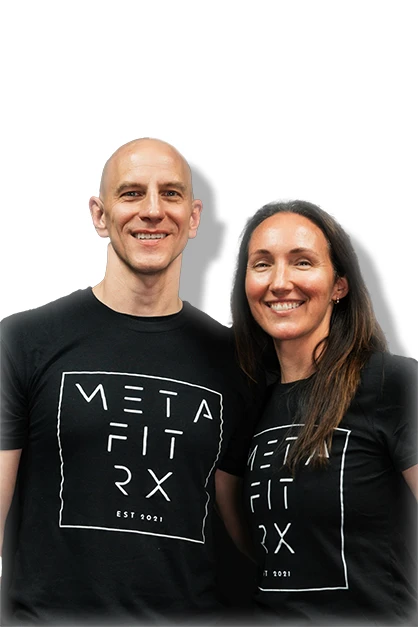
Guest Name: David Ambrose and Melissa Ambrose
Guest Credentials: David: MS Health Promotion Management. MElissa: MS Exercise Physiology
Discussion Details: The difference between exercising for health vs. aesthetics
A “practical care” model that goes beyond the standard annual physical
Metafit RX focuses on core metabolic assessments (DEXA, resting metabolic rate, VO2 max), while Metafit MD integrates blood work and physician-guided care using a telehealth model. Their approach emphasizes patient-directed decisions, behavioral coaching, and appropriate referrals when needed.
We also discuss real cases where metabolic testing helped uncover underlying conditions that would have otherwise gone unnoticed.
Benefit of Watching: If you’re interested in longevity, performance, menopause/manopause, metabolic health, or building a more complete health assessment model — this conversation is for you.
Address of Guest’s business:
7001 Forest Ave, Suite 110
Richmond, VA 23230
Melissa Ambrose: Oh, yeah. I know there’s the long story, so we’ll do whatever with that you want. Oh, it started with her idea. So, Oh my gosh. Yeah, the long story. Um, I mean, the the short version is that, you know, our business was kind of born out of exactly what I did in graduate school. Um, but in graduate school, I was working with elite athletes and which was great. Um but when I got out of school that that really wasn’t what I wanted to do. Um so when the business finally formed, you know, we realized that our target market was not athletes. It was just your average person who wants to get healthy, wants to learn about their body, wants to kind of cut through all the noise that’s out there. Um you know, and it it took a long time for us to really get going. I think uh our business as it is right now has been about five years. Um, but even within those five years, it’s still kind of been, you know, figuring out, uh, you know, kind of getting getting our groove. I would say probably for the past two or three years, it’s been solid. We’ve, you know, we’ve kind of figured it out. But yeah, getting here, my gosh, we went through so many things um to start this business. We’ve had so many other odd jobs. Uh, and then I don’t know, somewhere around five years ago, I bought my fork’s little metabolic machine. I was toting it behind me as a personal trainer. like we’re gonna make this business work. So, we would go back to DC and run testing on our old clients and it was just more of a part-time thing and then I did this kind of work for other businesses for a while. Um, and you know, it finally it just got to a point where the way we we wanted to do it differently and I think that’s where the business was born was when we figured out how we wanted to do it.
Dr. Camille Ronesi: What was that what was that different? What was the what was the gap that you were filling?
Melissa Ambrose: Yeah, the biggest one that I’ve already said is a lot of times this caters to athletes or when you think of V2 max, you think of an athlete and you know, we wanted to tailor it to to everybody. We wanted to make it so that everybody can do it. I’ve had an 84 year old do a V2 max assessment, you know, so we so I took I I personally spent I don’t know a year or two kind of developing these protocols so that everybody could do it. And I think that was that was really what it was. Not that we don’t love athletes, we get them. Testing them is fun. Um, but they know about their body and you know, so getting somebody who really doesn’t know and is really embarking on that journey for the first time and being able to explain to them what’s happening and you know, showing them all this stuff. That’s really kind of where our passion kind of exploded. Um, was just kind of getting away from that assumption that you have to be in shape to do this. It’s like no, actually this this should be your starting point is this information. So I think that that was the gap, right? The people that have kind of already in this realm, you know, if you look at their websites and you go to their places, it really does cater towards athletes. And I think that scares a lot that can scare a lot of people off. It would scare me off. I wouldn’t consider myself an athlete running a V2 max assessment. So that’s kind of how we looked at it is, you know, if the average person is kind of feeling uncomfortable with that setting, we wanted to make it much more approachable and a much more friendly setting.
Dr. Camille Ronesi: Absolutely. Maybe we should take a second and kind of explain what V2 max testing is. And when you explain that, could you go into also what that would look like for a non-athlete? Because I’m picturing what we did in school, right? And that
Melissa Ambrose: Yeah. It doesn’t end well. It so any any V2 max assessment, the goal is to get you to your max effort, right? Your your max capacity. V2 max is the volume of oxygen at max effort. Max effort for everybody is going to look a little bit different. And so what we’ve done is, you know, we have a traditional bike and a treadmill that you can use on the treadmill. We have a walk or a run protocol. So I think traditionally you run. Whether you’re a runner or not, you just run. And I can’t do that. I can’t just get on the treadmill and run. I would gas out super quick. So you know, we have a a pretty extensive conversation with a client before we do a V2 max. What is your starting point? What are you comfortable doing? Most people walk. We have a walking protocol where you never have to run because we have a treadmill that goes up to a 30% incline. So where you’re walking up a hill. Uh so we’ve got those types of protocols where everybody can do it. Um you know, regardless of whether you’re an athlete or not, twothirds of the test is very easy. It’s it’s a it’s a very gradual build. It’s a very slow build. Uh we purposely do that. We drag out what we call your aerobic zone on purpose because we’re looking for some specifics which we can get into later, but we’ve purposely made our protocol. So, it’s a very long warm-up, a very long aerobic zone. And then that last little bit um that last little burst of energy that you know, officially going for your max, that’s when it’s going to get difficult no matter who you are. But it’s it’s designed so that anybody can get there. You can walk it, you can run it, we can cycle it. Um, but it’s just making sure that we start at a comfortable place for somebody so that they can get acclimated. You know, the first couple of minutes are super easy on the test and then by the time we get ramped up and it’s only 15 minutes long. Um, you know, the coolest thing is seeing somebody who didn’t think they could do it actually be able to do it and show them their capacity. Like they might say to me, “I’ve never done cardio before and I don’t do cardio.” And I’m like, “Yeah, but look what you did do. So now we can and we can kind of plan off of that.”
Dr. Camille Ronesi: Yeah. And people love anything that tells them something about themselves.
Melissa Ambrose: Yeah. You know, it’s all I mean to our advantage and that that’s kind of a really So, so what is it about that V2 max that’s even useful like besides it being this number or whatever?
Melissa Ambrose: Yeah. Well, so and we can get into there’s there’s a lot of, you know, assessments that we do and kind of what they mean. But the V2 max, your volume of oxygen at max capacity, that’s a normative data standard, right? Where ACSM norms, how healthy are your heart and lungs, right? that’s going to put you in a category of fair, superior, excellent, whatever. Um, that number we really just kind of look at as your longevity number, right? How how healthy are the heart and lungs working together? I would say the applicable data that we get is we take a very close look at somebody’s aerobic and anorobic zones. So, your aerobic zones being that low intensity. Um, how well or when does your body burn fat, right? And then when do we switch over into that anorobic zone? when are you you no longer have enough oxygen coming in because you’re breathing heavy. So now you’re 100% carbohydrates, right? So we’re able to look at your you know your what we your fat burning zone uh versus your anorobic zones and go over them and say okay why you know why is this important and where should we train for your goals? Because based on your goals it’s going to be different. You you might lean on one type of training more than the other. Um, you don’t have to be a super endurance athlete to have a good V2 max. You know, we’ve seen lots of people come in that are not runners, they’re not cyclists, but they do other forms of activity and their V2 max is great. Um, so we look at those zones. Uh, we have about five heart rate training zones that we give people and based on their goals, we say, you know, I you need to train here, you need to train there. Uh, and try to make it something that’s applicable for them and that’s sustainable. Um, so we give, you know, our cardiovascular recommendations are purely for cardiopulmonary health, right? How can we improve or maintain your V2 max? How can we improve or maintain your body’s ability to burn fat or whatever is going to help you with your goal?
Dr. Camille Ronesi: Okay. All right. And with that, go David, did you want to say something?
David Ambrose: No, no, there’s so much. Yeah, there’s a whole there’s so much I’ll talk about. Oh, of course. Yeah. Yeah. I feel the V2 max accessing certainly, you know, my experience was definitely the like go get on the bike or go get on the treadmill and just go and go and go and go and go and you’re like you’ve got the mask on, right? And you’re just doing all the stuff and someone’s yelling like keep going until you fall out. Right. So, it’s it is very interesting to think of trying to recommend that to somebody and be like, “Be prepared.” And it sounds like they’re not getting that they’re not having to face that like massive thing to that which to an athlete is is not that big of a deal because it’s it’s like, “Oh, I can do this.” And it’s it’s there, you know, the component of the test there. It’s going to be difficult. But I think we ramp it up in a way and we make people feel comfortable in a way that that gets it done. Um, you know, the test is voluntary. I’m not standing behind you, you know, screaming at you and yelling at you, right? Treadmill. Um, and we do have a submax test available if somebody really can’t get to max or, you know, if there’s an issue there. Um, but most people, I can only think of one or two times in our five years of doing it that somebody couldn’t do it. Most people have been able to do it. And you know, we really try hard to make sure that whatever fears they have coming into it, I think when everybody’s done, they’re like, “Oh, like that wasn’t nearly as bad as I would say that wasn’t so bad.” But no, we’ve never not had someone get anorobic. Well, I have, but that’s keto. That’s a different No, but I’m saying we’ve never not had someone complete the test where you couldn’t extrapolate the That’s everybody’s gone. You’re always able to get the data. Yeah. So even if somebody So what you may see in some populations that they’re not used to getting their heart rate up higher and feeling that out of breath sensation where they’re exhaling while they’re inhaling and they’re panting at the end, they as long as we get them to that point where they become anorobic and carb 100% carb burning, we can extrapolate V2 from that. Yeah. Right. Some people just get uncomfortable in that situation. And that’s all it is is they’re not used and it could be someone that’s very deconditioned, a lot of excess body fat. they just don’t do cardio and or they’re yeah just they’re aren’t familiar with it. But I will say that in a 15 minute test typically you’re looking at probably a five minute warm-up, a two and a half minute cool down. So that seven and a half is what’s left. They probably don’t become anorobic until usually 10 minutes in. And if they’re deconditioned that’s over after 30 seconds. So really conversational the first 10 minutes and then maybe they’re not convers like they have to really focus for the next 30 or 60 and then they they you know they say I’m done and they you know and as soon as you’re done within minutes you’re fine. Yeah. It’s not like it lasts all day, you know. So the protocol she developed is really it’s really her own I mean the way we’ve that she’s developed it is so that anyone can do it. And we’ve had the biggest we’ve had was someone who was 440 pounds do it. a guy want to be a firefighter. Yeah. Was on our bike. And our 84 year old was our oldest that we had we had do it. Um 82 year old male who when his wife had just passed, he took care of her for a couple years and watched her decline and felt and saw his decline at the same time. So he’s trying to get some of that back and and make the next 10 years of his life better because he of what he lost and seeing what his wife went through. So there’s never there’s not an age limit. there’s not a uh as long as you can physically get on there or or get on the bike. We had a guy that had a degenerative muscular disease. He wasn’t able to do it and that’s the only person um who wasn’t able to do it because he doesn’t have full use of of all limbs but unfortunately he tried it tried to do it at his gym and he’s like I just Yeah. So that was the only time right as someone who didn’t have full mobility right how do you navigate um heart conditions? So what’s your
Dr. Camille Ronesi: Yes. as long as they’re cleared by their cardiologist. You know, this is what because this because people will ask us a lot and my first question is, have you been cleared by your cardiologist to do highintensity work? That is step one. Um, or has a doctor or a cardiologist told you specifically not to go above a certain heart rate? Like those are red flags for us. Um, but most people even with whatever heart condition, most people are able to do it. Um, you know, we obviously do do our screening. We have our waiverss and our um you know our park cues and everything that we go through. Um but unless you’ve been specifically told not to do that kind of work, it it really hasn’t been an issue.
Melissa Ambrose: You know, we have had people that have been on medications a problem. Yeah. Aphib would definitely be a problem.
David Ambrose: Yeah. Well, Aphib is told not to do it. Like we won’t do that, right? Stress the heart maybe putting you in AIB is basically when they’re on a beta blocker or another medication that lowers that suppresses the heart rate. There are some yeah medications that will suppress the heart rate or suppress blood pressure. Um and again as long as we know about it and you’ve been cleared to do that type of exercise, it it it hasn’t been an issue.
Dr. Camille Ronesi: Now as the Yeah. How would you adjust for a beta blocker?
Melissa Ambrose: Well, so as the technician, you know, what we say is if this is your norm, we’re going to go with that, right? So we don’t necessarily adjust because I want I want to know what they can do. So we say, you know, if you can’t get your heart rate above 150, if that’s your max, that’s what we’re going to roll with because that’s what you can do outside of here. So we don’t necessarily adjust for it. We just take whatever your norm is. If this medication is your norm and this heart rate is your norm, that’s what we’re going to do. Uh we see that a lot with thyroid medications when we’re testing metabolism and it’s going to regulate your thyroid. And so I always tell people if your medication changes, the test might change. like we might need to redo the test, we may need to redo redo the data. Uh but it’s it’s really there’s really not that much that we can’t handle. Uh we just make sure again that they have clearance to do it. That’s the big one. And making sure that they’re able um that their physician has said it’s okay.
David Ambrose: I mean, most people coming to us in that circumstance have already been referred by their physician. So they already have clearance, right? They’ve already been okay to go. Okay. Even if that’s their norm, that’s the data we’re going to go with for our recommendations. Yeah.
Dr. Camille Ronesi: Okay. So, let’s put some clarity on because you guys are in the thick of kind of this big launch of of a Metapit expansion or however you want to see it, but like you guys are really stepping into some very forwardthinking, future thinking field with this. So, there’s Metafit RX. Yeah, I see. You know, fitness, nutrition, behavior. It’s a lovely shirt. Um, tell us about that versus the new stuff that’s happening.
Melissa Ambrose: Yeah. RX the new Yeah. Yeah. So our so Medit RX was the original, right? That’s our kind of current business that’s been in place for about five years. Um that really centers around what we call our core metabolic assessments. That’s the DEXA scan for body composition, the resting metabolic rate for your nutrition and for your metabolism, and then the V2 max for fitness. After that, we we kind of saw this need to take it further. People asking us questions about their blood work, asking us questions about their um hormones. And so this so this is where you know David has kind of really stepped in and created Medit MD.
David Ambrose: Yeah. We were we kept people kept asking us to look at their blood. I’m like I’m not a physician. You know I I can look at it in the same way you can and it says that your CRP Yeah. your CRP levels are okay. I mean I can read it just the way you can but I can’t interpret and diagnose and or prescribe. So we looked at it as one we were just looking at blood. We just want to get the blood work to help enhance and also because we work with obesity a lot and we work in longevity for lack of a better word really when we talk about just being really healthy, right? How can we optimize our our middle middle to end of life is really how we think of longevity is is is sleep, diet, stress, exercise, right? There’s no secret but we kept getting asked about it. So I was like, “All right, well blood is one.” And then we kept seeing lots and lots of people on GLP1s and scanning doing a lot of dexes and tracking people on their weight loss journey on GLP1s. And then we keep talking to all these people who are like, “Oh, I can’t sleep. I’m having I’m having all these issues, you know, I’m like, you know, so I got tired of hearing about it.” And no, but it’s it’s very real, right? And the symptoms that occur to women are very real. We kept hearing dismissal by the traditional medical practices, not by the better physicians that we work with, but by frankly more the larger systems that don’t have time, you know, not coming from concierge or direct primary care who we partner with a lot. It would come from the big systems that are insurance based that have five minutes with the patient. Right. Right. So, and they’re like, “Oh, honey, you’re just getting older. Sorry, Camille.” Yeah. You just have to deal take some birth control. Right. Here’s some birth control. Well, and it’s also like it’s the the the the shift in conversations around par menopause and menopause. It’s I mean it is it’s not just a shift. It is a fully different vehicle we’re in now. You had a complete reversal in hormone therapy in the last year, right? Yeah. Three years ago, a patient with chronic elbow pain and we couldn’t solve it. And now I’m like, oh, go get your like go get your hormones checked. like go get on estrogen your hormone medication and boom elbow pain gone, right? It’s a whole different level of awareness and it it takes it takes 10 years for everything, you know, right? Like for medicine to catch up. It takes it t and those big systems don’t have the flexibility to make that shift. Yeah. And there were some some people we were seeing with our testing, it was just out of our scope and like we need this stuff with the physician. We needed to be able to combine what we do with what a physician can do to do what’s best for the patient. Yeah. Right. And then adding in we we’re looking from that again that longevity perspective of muscle health and sarcopenia and total muscle mass, visceral fat and total body fat, bone health. So now we’re doing the diagnostic bone scans also. It’s not a primary, but it a diagnostic bone scan for osteopenerosis diagnosible is what we can now write the order and fulfill and have our physician hop on a call. And then our goal really with MD though is to get you to a good primary care doc. So we if someone decides to do the way MD will kind of work is you must do RX testing. It’s a requirement. DEXA RMRV2 blood test that’s the baseline bone test also included. Then from there you have two options or three options. You can either depending on on what the results of your blood testing of of your RX testing, the consultation of the physician, your symptoms. It’s super nuanced, right? This is very nuanced. Hormone therapy may be an option or GLP-1s may be an option or both may be an option for somebody. So it depends on what they need and then from there we give recommendations. But we’re really talking about, we talk about this a lot about patient directed care or self-directed care, which can sound a little hacky, but what we really mean is is working together so that we present the information to the person and they can really take control of their health and say, “Look, this is what we recommend. You don’t have to do it, but this is what we recommend.” Or if they say, “Hey, I really want to get on testosterone, but you know, we look at everything. The symptoms aren’t there. The blood work doesn’t support it. behaviorally, you know, we we might say, “Look, we get it, but we don’t recommend it at this time.” So, there are other people also who will prescribe anybody testosterone who walks in the door, and we won’t be doing that. We’ll only do it when it’s it makes medical sense, right? And it’s not as simple as a blood test. So, us having this complete battery of testing the way that nobody else does really gives a big advantage to look at them in a very holistic way and all the cardioabolic markers that no one else is simply providing. Right. So we
Dr. Camille Ronesi: So that patient experience is they come in, they’re like, I want to do all the things. I want to live forever. I want you to like scan me head to toe, like stick me in the scanner, take my blood, do all the stuff. So they come to you guys and that’s what they’re doing in your space, but they’re not seeing an MD in your space. Is that right? Tell
David Ambrose: virtual. Okay. So you guys are the implementers and then you still have that MD level coming in to say okay this is what all the all the data is saying and they are saying these are the prescriptions these are the actions and then you guys but you guys don’t stop there you don’t stop that relationship with that person there so what like tell me more about that where that will work is from there they have if if if all they needed was like like you came in right and and you’re good you’re your V2 is superior your body composition was perfect. There’s nothing to improve. You’re you’re obviously a specimen, right? Um, you know, what’s there? How would you prove improve perfection, right? So, you would be That’s what I say every day, right? You know, we we did all that. You want to do your blood testing because you want to be preventative. So, now you have a metabolic plan that we lay out for you to say, “Here, Camille. Frankly, the answer is keep doing what you’re doing, but if you want to improve it, here’s what we also recommend, right? And we’ll see you in a year.” Right? But now you now you’re also having symptoms of pmenopause and you’re and through your discussion with Dr. T, ironically his name is Dr. T. Um but you you you uncover, hey, you actually are a good candidate for HRT, right? That hormone replacement therapy could be a good option for you. Now it becomes different because now we need to monitor you, right? GP1s are not a good option for you. they’re not needed. Um, but HRT could be a good option. You decide to do it. We write the script, you fill it. We do not sell the medication, do not provide any medications. You we write the scripts. We don’t draw the blood. We’ll send you to LabCore. But you then will get on to a monthly subscription at that point where we would continue to monitor and through any test that we need whether DEXA RMR or V2. You would have behavioral sessions with me. you would meet with the physician and we have the ongoing medical support team in a way that again nobody else provides and that would be a six-month window and then from there hey I’m doing really well you know we’ve now connect you to a PCP who can just prescribe this for you don’t need to be spending an extra fee with us just come back see us when you need us and graduate from the plan kind of I may sound kind of weird but the goal is to get you hopefully in that place where you don’t really need us um as high of an intensity. Now, if you don’t have a doctor who won’t prescribe, it’s a different story. And you know, a physician that won’t prescribe or understand this or or whatever it may be, that’s where someone may stay on it. And it depends. It’s really individual on the person where what do they need, how long do they need it, and again, we we really want to team up with people that are good PCPs to to handle this. So there’s, you know, they’re just coming back to get a screen or if they just enjoy working with us, too, they can stay working with us. But it’s very much driven by what you want to do. There’s no pressure to do it whatsoever.
Melissa Ambrose: A big component that he said, the behavioral change, the behavior piece, that’s that’s actually a big piece that brought us into business together. Uh because I am the lab rat, right? I do all the data. I do all the testing. But what we found found out pretty quickly was, you know, I hand you the answer and then a year later you haven’t done any of it. And you and I just stare at each other and I’m like, well, why haven’t you done it? And so it there’s so much more than it’s easy on paper, right? But applying it in real life for everybody is so different. And that’s where his background came into play. Um, so I’m a clinical exercise physiologist. I’m like, here go do and you know your life gets in the way. And that’s where, you know, behavior change for people has been such a massive part of this because none of this matters. None of the cool data I give you matters if you’re not going to apply it and if you’re not going to do it. So that that was honestly what brought us together in this business was the fact that yeah I can give you all this stuff but if you don’t know how to change your behavior and make those habits and you know slowly work towards a healthy lifestyle. Yeah. You know what I hand people on paper is perfection. You can’t probably can’t go do that tomorrow. You probably have to implement it slowly. So that was a a really big piece was kind of bringing in that coaching. Um so we have you know we have options for that. you can come in and get the stuff and be on your way, you know, or you can do the accountability and the coaching and the behavior change. So that that just alerted me that oh yeah, it was a big reason that we got into business together was because of his background being in the behavior with my background being in the physiology and they don’t really work without each other. So together it’s been a good Yeah. So it’s like we literally have the art and the science like here together. You need them both and you need them both.
Dr. Camille Ronesi: Yeah. Yeah. That’s I think I think I bet if I by the time I finish interviewing all these wonderful, brilliant, expertise-minded people around, that’s always going to be what comes out. Like the people who are actually quite good and quite passionate about building their community and truly helping people are really interested in putting some art and some science together, you know? And I think I think it’s really neat to see how you guys are doing this in this very highly specific way that while maybe it was slow to start, I feel like it’s super future thinking. Yeah. Um and that’s it’s trending that way, right? Like more and more people are starting to understand that they want to be seen as a whole person. They want they don’t just want a V2 test. They want a V2 test and their blood work put together so that that’s known. They want to talk to someone about how they feel about it, you know, and then they want a plan. So, how do they get h tell me about that behavior and plan piece? How about that that year in between? What’s happening?
Melissa Ambrose: Yeah. So, again, that’s that’s kind of up to the individual, right? I will say some people come and get this stuff and you they’re good to go, right? They’re self-driven. We’re going to see them in six months and we’re just redoing the testing. Um, if that’s not you, you know, we have a membership option that’s basically coaching and you can check back in on the machines. You know, David is the health coach. He’ll have the conversation. Typically, sleep, diet, stress, exercise, repeat. You know, what what’s going on in your life? What are the barriers that’s causing you to not make those behavior changes that you want to do? And it’s it’s as counseling as you can get without therapy. Right. I I don’t I I I know where that line is. Yeah. Right. And it’s the reason why I’m always reaching out to mental health clinics to say, “Hey, uh so mental health clinics and dietitians because there are some everybody I talk to that I end up doing coaching with, one question I’m asking is about are do you have a are you seeing a mental health therapist?” Right? And a lot of times people are and it very much can straddle that line, but I stick to those four areas. sleep, diet, stress, exercise, and once it gets to things that I’m like, this is out of my scope. I need you to I want you to talk to somebody, right? And I’ll work them out. The same with dietitians with eating disorders and disording. We have a dietitian that we work with who we write under. Uh Stephanie Maul, who is my sports nutrition professor from grad school. She’s up in Nova, but we also have a Nourish to Flourish, which is by you. NTF has been fantastic. We’ve sent a number of people to them. Stephanie Militano, who’s a sports dietician for young female athletes. She’s all online. She’s out of Williamsburg. She’s fantastic. So, we we always want to send to the appropriate provider for what they need. If they want inperson, if they want insurance based, cashbased, it, you know, really depends on on what their needs are and we send them to the best person for what their what their needs are. And and what maybe it’s not our dietitian, maybe it’s Stephanie or it’s it’s NTF, right? And it really depends on economics, too. We had a woman call in the other day that was asking about our services. I told her how we don’t take insurance. And long story short, referred her to NTF. And you know, she was so blown away that I was going out of my way to connect her to a prov. She’s like, I’m not going to come see you. I’m like, but I want you to get into the right hands of somebody help you. And that’s what was mattered was there was no she was she’s not coming. She can’t afford the testing, right? So, so, but she needed someone to talk in her cover her insurance and they do. So, it’s, you know, turned into a perfect fit, right? Yeah. She wins, right? We we have a great referral way over the past and she win if she gets the service she needs. So, it’s a win-win if you ask me.
Dr. Camille Ronesi: I agree. I think that there’s a big difference between feeling like you’re the expert that can give your patient a great experience versus does your does the patient get a good experience with an expert? Like, yeah. And I think anybody worth their salt in the health and wellness field cares a lot more about that you get to the to somebody. And you get to the person who’s going to help you and that you want help from. And if that’s because you need to go through insurance, you need to go through cash or you need a female or you need a male or you need a big gym or a tiny clinic. Like I like there’s plenty of people that you guys like, I want you to come see me, but you’re like, are you going to go to a nutritionist? Like let’s start there. like let’s get you to somebody and let’s get you to the right fit. So it I mean the everything the way you guys describe your clinic it sounds it sounds so much I think where it’s it’s it’s almost hard for the rest of us to like take a bite out of is you’re almost like a primary care like you’re like you’re like a triage you’re like a I know you’re not but like the point being is in like how it’s better to think of like a family physician or a triage situation is they are not the ones actually implementing everything but they are the first they are the first tier. They’re the ones who open the door and say, “This is the path you need to go down and this is who you can call.” Right? And that’s what I mean. I know it’s not you’re not you’re not the primary care, but just like you triage people with data and you say, “These are the what you need. These are the ones we can help with. These are the three other providers who I want you to talk to.” Right. Right.
David Ambrose: Yeah. I would say we’re not primary care or practical care because the idea is in primary care, you generally get a blood on your annual, we think I talk about annual physical a lot. you get your blood panel and the doctor okay you’re you’re great I’ll see you next week Susie you know like I’ll see you in a year for your your annual but where’s the practical where did you test my strength which we’re also adding that through VA performance testing system so we’ll be testing some strength metrics now too so when we send it out to a PT or a trainer hey by the way we have some baseline metrics here that we have normative data and comparisons on and their balance was they really need to work on balance and their Um, we did we we can do really cool stuff. That’s a whole other conversation. But testing strength, something we I was going to tell you about is we want to start to integrate a MSK screen to an annual physical vis. We envision a physical as being blood, msk, strength, what all of our other testing and a mental health eval really, right? And then on the back end, you have the physician who talks to them and takes all this data and puts it together and they provide that as part of a super with a blood. You have all these other providers come together and you have a powerhouse of information. It’s not just, oh, your blood was fine and you’re good. I mean, your blood your blood doesn’t lie, but your blood doesn’t tell the whole story. It doesn’t tell you if you can pull yourself up off the ground. It doesn’t tell you if you have good balance. It doesn’t tell you what your visceral fat is. Doesn’t tell you what mobility is. Doesn’t tell you if you can do your ADLs, you know, it doesn’t tell you any of that. So, there’s a lot lacking in your annual that I think is really incomplete. So we we are really so we’re kind of forming what would we almost call it an executive physical where we have other providers do the parts we don’t do but they’re integrated into the offering because they’re really I we believe like what you do is super super an MSK screen is super super important. Yeah. Really really important and especially for like an old man like me it’s like everything just hurts now. Nothing moves like you know 24 is different 48’s different story you know it’s a different story. Yeah, those MS like we underestimate MSK screen. The the rest of the world does. Like it’s MSK screens have been certainly part of my they they’re what got me in trouble in the first place, right? Like I was perfectly happy to be a pretty standard corrective exercise specialist. Yeah. You know, as a personal trainer. And then I started really getting into that functional movement screen world and the the overhead squat assessment and like all these assessments. And certainly, you know, when you do that, you go you swing too far and you get like hyper corrective and you get hyper neurotic and everything is form and technique and then eventually you soften back to like humans or organic and they can move. But that screen is so powerful for for just giving you a snapshot of like this is where you are, right? And these are the and then but my stick with people is always like well the screens don’t work like but you didn’t ask the next question, right? You didn’t you you saw that they couldn’t do this or they could do that or their knee did this or their elbow did that, but you didn’t then ask the next question which is why. Yeah. You know, so where where do you take those screens next? Like where where where do you go with the why? Right. Yeah. And that’s I think it integrates really well as part of this comprehensive and em like a screen on its own can be hard to to get someone to do convince them why it’s important. But when you look at the totality of some strength testing and body composition testing and you find out, I’m not going to say their name, but we have one person who’s a former professional athlete. Physical perfection. Yeah. But the man can’t touch his toes. Can’t touch his toes, though. Body fat’s perfect. His biggest area he needs help is in is in is in that screening for his mobility and flexibility. It’s it that’s where he could show demonstraable demonstrable improvement, right? And otherwise he there’s really not much else to improve on him. It’s just maintenance. But he that’s an area where somebody like that could use major help in that way to help him take that next level. I mean mobility and flexibility completely lost on this person, you know, and that’s a massive thing. So you have all this muscle, you’re in great shape, but you’re not going to be able to move it in 10 years if we we don’t, you know, there’s always something, right? There’s always something that we can help improve upon, and it’s not always something we can do. So being able to have, you know, that comprehensive care and that’s how you
Dr. Camille Ronesi: Yeah. You guys do have a trainer on staff though, right? Or do you still you don’t anymore? Okay. So you do you refer out for any kind of fitness like people aren’t working out. They’re not coming to your place to work out.
Melissa Ambrose: No, I mean we we all have personal training backgrounds, but we we refer that out just because we have such great relationships with personal trainers and it’s it’s just so much better for us to do the testing and then let let them do, you know, that type of program, do their thing.
Dr. Camille Ronesi: Absolutely. That’s the advantage you have there by doing kind of a hybrid model, right? And your background too with training and a therapy like it’s it’s it’s a good com because that’s where you see personal trainers kind of go to. Do they do, you know, do they go on to become a DPT or do they just maybe get into strength and conditioning, right? You know, do they get into rehab? You know, what do they or just stick with personal training and gem pump? So, it helps tremendously because, you know, putting people under load is risky, right? So you need to make sure they don’t get hurt and and that’s where you have that big advantage in that way. Um yeah and what we’re seeing now um certainly our clinic gets a lot of it and I think I think it’s in part because of the the conversation trends that are out there in the world right now. Um as well and our awareness um and then also just because I like the weird problem. So I don’t get straightforward orthopedic. I always get something where it’s this like weird tangled mess is that it’s always some like there’s always some element of like a dysotonomia, some kind of sympathetic nerve system issue or a um they’re on a hypermobility spectrum. Like there’s something where there’s more complexity. Um something where their body is in some way inflamed because of lifestyle, because of because of uh a disease, because of whatever it is. So, it would I’m really intrigued to see what it will be like to move forward in physical therapy if we have organizations that are giving us those kind of numbers. If we’re getting that kind of information as part of the picture, like, oh, you’re not in pain because you’re in pain. You’re in pain because all of these blood levels are out of control or your V2 max is, you know, your threshold and your V2 max are so far apart that you can’t tolerate anything. Yeah. you know, so I’m really interested to see how you guys continue to build your comm community, your um your networking, but not networking, your um your language or with us with the other providers that you partner with to enhance somebody’s experience.
David Ambrose: Yeah, that’s the whole goal is to enhance outcome to um improve outcomes, enhance the experience, right? And that’s where I always emphasize to people particularly people like, “Oh, I’m so booked up. I don’t need to network.” And I said, “But you’re missing the point.” The point isn’t to network. The point is the people you see have other needs you do not fulfill. I guarantee it. So, it’s great that your books fulfill it for six months. One, what happens to if that falls off? Oh, now I need to start networking. But now you’re a year behind. But two is you you have other needs. I They have other needs. I guarantee it. And if you don’t ask the right questions, you never discover what the other needs are. So, it gives them a better experience. they they love you even more and they get better ultimately they get better they just get better outcomes.
Dr. Camille Ronesi: Do you feel like you’re catching stuff that has been missed sometimes?
David Ambrose: Yeah. There there’s been there’s been some testing that we’ve done five five times we’ve had it now and you know we can’t diagnose but we’re like hey this is seriously abnormal and you know there have been a couple times where after a test I have directly contacted a physician and have been like you know we don’t necessarily know what this is but here’s what’s happening and they’ll go into additional testing and bronchiacttois bronchiosis is one we’ve had it we’ve had it lung disease so yes so bron so bronchis bronchyis is like a wet COPD. So, yeah, we had this is the first time we saw the anomaly occur. I was running a test and Melissa figured I messed it up. I didn’t. Um, we retested this woman. I thought for sure it was default. Yeah, that’s the obvious default. Yeah, there’s a woman seen this. It was a very active woman in her in her 60s. Luckily, her physician had referred her, so we had an automatic fallback to to talk to. But we retested her because when this woman became anorobic and went for max at the end of the test, her heart rate continued to rise, but her oxygen her V2 she became aerobic like so she just thought she was so out of shape. No, no, she she she was huffing and puffing and you would have thought she was running a marathon. She looked like she was in great shape. She felt fine, which is why I thought he messed up or something messed up because I was like, “This isn’t correct. Her V2 should not be going down.” We tested it again and it went down again. I was like, “Now something’s wrong.” Yeah. But her lung so her lungs weren’t functioning properly to produce oxygen at that point and they were now taking it away and it was her heart rate would continue to rise and then you saw V2 max go down where you normally see these. Yeah. They normally go together, right? So now you know her expired gases were not reading correctly and we’re like so we did it. We repeat it exact same moment where she comes anorobic same heart rate everything. It happened again and we’re like okay. So, long story short, referred her back to her doc. Um, they had found a spot in her lungs almost 20 years ago. They and it had hadn’t appeared in almost 20 years. She was asymptomatic. Retested her, did more imaging and testing and found out bronchiacttois is there. So, this woman woman by being so active into her 60s has saved off being on oxygen basically because now she’ll eventually have to be on oxygen from the disease as it progresses. But she’s done a very good job at stopping that from happening and it’s due to her own I mean she’s an athlete in her 60s. They had no idea that was even occurring. They Yeah, they had no idea because that that one anomaly um almost 20 years ago hadn’t shown up in any other testing, nothing else. So doing the V2 made it appear and we’ve had that appear a few other times and we had another person that outcomes. We have we never found out the uh the outcome but we had one we need to follow up. This person had a s significant drop in his V2 max one year apart. Yeah. Despite doing those same activities, he had a very like a a rather large decrease. You would not expect to see which is not normal. Which is not normal. Um which we don’t know what we still don’t know what the issue is with that person. But as a result, we now refer them and then we’ve seen a couple of times on the DEXA. Yeah. Lymphod. Yeah. So on the DEXA, we’ve seen fluid where fluid should not be. Yeah, lympadema. Well, one one was a confirmed case of lympadeema. Uh but one we haven’t confirmed yet and we’re not quite sure what it is. Um and so yeah, you know, again, we can’t diagnose, but I’m I’m looking at the screen and I’m like fluid shouldn’t be around your abdomen, like let’s call a doctor, you know, and so stuff like that, it’s rare. Um but stuff like that does occur where we’re able to alert people to something being wrong. Yeah, that’s a big one on the DEX is when you see fluid in the muscle and when someone is, you know, 200 pounds and they’re 5’2, but it’s saying they’re 15% body fat. Yeah. That just isn’t right. So, it’s because it’s reading his lean mass. Yeah. Everywhere. Yeah. So, and then with metabolism, we’ve seen it where people can’t lose weight on their GLP1s. And you find out that there was a male we had his he should have been around 2,000 calories for his height, weight, age, and sex. He tested at only 1,200 calories. very low because he had gained and lost 50 pounds or more about a dozen times. He was always going up and down and crashed it. Yeah. So, he destroyed his metabolism. He literally only burned 12 as a middle-aged male over 200 lb only burned 1,200 calories a day. Yeah. And he could not lose weight eating at around 12. He’s like, I’m not losing any weight. But that’s his baseline. So, he this guy was getting down into way lower to to had to get down to like 500 calories a day to lose weight. So we do we do catch some things you know obviously there are some things that we don’t know what they are but we make sure that we refer it out but sometimes there’s a piece of the puzzle like that where you know everything should be going everything should be working you know but the math ain’t nothing and they’ll come in it’s you know something like that something like the metabolism is slowed down the metabolic adaptation um you know we’ve unfortunately uncovered a lot of low bone density on people that you wouldn’t think to go get tested because you’re 40, you know, and you know, the s psychopedic obesity has been a big one, which is the fancy term for skinny fat. Uh, you know, we’ll have somebody come in, they’ve been told all their life that they’re normal, because they present as normal on the BMI scale, but they might have 40% body fat, not because they’re over fat, because they’re under muscled. And a lot of times they could be an athlete. They could even be an athlete. Triathletes have come in and that’s happened. That’s not that doesn’t surprise me. Proof, right? their vit is through the roof at their sarcopenic obesity and oftent times that’s accompanied by low bone density. Um we get I get a lot of exswmers who again they had phenomenal V2 max but very low bone density also they were never properly instructed on what to do when they stopped swimming. So obesity now enters the category because they’re they’re used to burning such crazy amounts of calories when they were swimming, you know, and they went from being an athlete to just being a normal life and now all of a sudden, you know, that that expenditure is just completely off. Um so we’re looking at low bone density, sometimes a low um metabolism, you know, and they don’t just don’t know what’s going on uh because they, you know, used to have that kind of athlete lifestyle and they don’t anymore. and it’s over time just kind of catches up to them without them realizing what’s going on. And then like I said, having that accompanied by low bone density is is we catch that a lot. Unfortunately, psychopenic obesity is a rough one, especially if you’re now you’re a woman in your 50s who’s always been thin, healthy, presenting as normal where we you know what people oh you look so great and look I’ve never had to work out. Well, there’s a lot there’s hundred other reasons to exercise and to lift weights that other than Yeah. books, right? But now she’s in her 50s. She’s sarcopenic. She’s no muscle. She’s not metabolically healthy. Not metabolically healthy. Maybe she has some decent cardio, but it’s a thing of, you know, putting on muscle as a woman in your 50s who’s never lifted weights. It can be done, but it is hard, right? It’s a challenge. It’s a real challenge. We might even need her to gain weight. And you’re talking about what? You want me to put on weight? And you need more. Oh, I went through that with somebody who was she came to see me because she was she probably had sarcophenic obesity, right? Like, you know, she walks five miles a day and she’s the same weight that she was when she was 25 and you know, but she has osteopenia. I’m like, great, let’s build some muscle mass. And she actually like got repulsed. She was just like, I’m trying to save your life. like, you know, I thought we were getting better about that, but still I think a certain age. Well, there was you can see like they’re just in that like I mean I think the kids coming up now are going to be are much better off and like kind of the the young millennials and then the generation under them, they’re doing much better. Yeah. Right. Especially the girls. But like from us up, it’s like and especially any like that boomer generation, it is toxic in their brains. like the very idea of building muscle is like this like not all of them but just there’s it definitely it’s very hard it’s an uphill battle for sure but it’s it sounds I mean it’s it’s such a beautiful place that you guys are in of being the ones that actually give data so that goal setting has some clarity around it and has measurable numbers and people love to measure and maybe we can start really pushing that into the insurance world so because insurance wants numbers that’s such an important one too is setting a realistic goal, you know, with with the DEXA, you know, we’re I remember the first time when I was in college, the first time I got my body composition done and my professor asked me what my goal was and I arbitrarily said something like I wanted to be a size two or something stupid and you know, I remember him going through my Dexa and he said, “Okay, well, we’re literally going to have to shave your hipbones in order for that to happen.” Like, you will not reach that size. And so it’s kind of taught us to look at what is your composition, what’s your bone, what’s your lean mass, what’s your body fat, how can we set a realistic goal based on this data, you know, also we we really try to relate to people um the difference between exercising for health. Yeah. And exercising for the Instagram body. And I think people have that massively mixed up. You know, they’ll come in and they’re like, I’m walking every day. I eat relatively healthy. Where are my abs? And it’s like, okay, we’re we’re talking a whole different Yeah. two different goals. Different ball game here. We’re talking about health versus athletic fitness, which is completely different. And you know, Instagram and Tik Tok doesn’t help. You got somebody shredded doing body weight squats. And I’m like, you didn’t get that doing body weightight squats. I know. Trying to set that realistic target for people because we all they all just have such a skewed view not only of where they’re at, but what’s possible to get to, right? And I’m like, look, you can get to that Instagram body, but knowing from experience, here’s what you’re going to have to do. It sucks. It’s miserable and you’re not going to be able to live your life. Like, so just trying to get, you know, that kind of realism and happy and healthy and what’s what’s that happy medium, right? because it’s not again not that somebody can’t do it but there’s that there’s really this disconnect between what’s healthy and getting to that athlete body and I and so many people are you know oh I’m doing X Y and Z they’re barely meeting the minimum for health barely and and yelling that they don’t have abs and I’m like we’re we’re talking about two different things here so you know the DEXA is definitely great for helping set those realistic goals what can you achieve with your body type what are we looking at that’s healthy Um, and that that can be really important because I think a lot of people, you know, myself included before I got into all this was like, here’s my arbitrary weight goal. I want to be 125 and it’s like not going to happen. You know, I’d be 0% body fat in which everything would shut down. So, it just wouldn’t work. Um, so we’ve really tried to be realistic, but be realistic in a way that it’s going to be it’s going to make you happy and it’s going to make you feel good and how do you feel and you know making the data a little bit more realistic for people.
Dr. Camille Ronesi: Yeah. Well, it’s I’m so glad that you guys are able to be such a strong resource in our community and it’s been really beautiful watching you guys focusing your community building around the providers or you know there’s just not a lot of people doing that and it definitely needs to be done. Um so I always feel like if I need a name I’m like let me let me call David, let me message David and see like if he’s got a good person for me. Does he have like the person I need? Um, and it’s like it sounds like you’ve actually had to because you’re leveraging all this data and you’re leveraging this customer experience. So, thank you for your service. Continue to build this amazing Richmond community for us. I think that’s wonderful. So, I think I’m gonna end it there because we could talk probably for another two hours and I feel like I have more questions, but I think what you’ve done today is help me and my patients understand that they do fit in this testing world and it will create a more effective and efficient plan for growth and change. Um, so thank you. Is there anything else? What final thought do you want to share with with the world? Oh my gosh. Internationally famous podcast. Our final thoughts. Uh trying to see if I took any notes today. Yeah. Other than like kind of how we started. This is for everyone, you know, and I feel like marketing 101 like that’s the worst thing you could say is that everybody, you know, it’s everybody, but it really is. I I think that yeah, everybody in some way can use this data. I I really think it’s helpful. And I really think that we have positioned it in a way where it’s accessible to everyone and where we explain it to you. You don’t just leave here, you know, you’re going to know what it is and how to use it and hopefully, you know, help make changes for the better.
David Ambrose: Yeah. It’s that that the practical care component, which we because of you, we’ve now coined that term as practical care. I I think you should I think it makes it makes sense because I’ve always had an issue with the standard annual physical not being it just lacks so much. Right. Yeah. I think you’re for anyone who wants clarity around their metabolic status. Yeah. Right. And I think that that covers a lot of territory and I think everybody has a metabolism. So yeah, it’s for everybody. Yeah. Right. In theory, we all have one. Yeah, it’s there. How it’s working, that’s another story. That’s another question.
Dr. Camille Ronesi: Well, thank you guys so much for your time. I am looking forward to getting this out there and sharing with my patients and I am looking forward to talking with you guys again in the future. I definitely have someone tomorrow that I will be passing your information along to. So, awesome. All right. Bye, guys. Bye. Thanks so much. Bye.