Interview with Amanda Harris
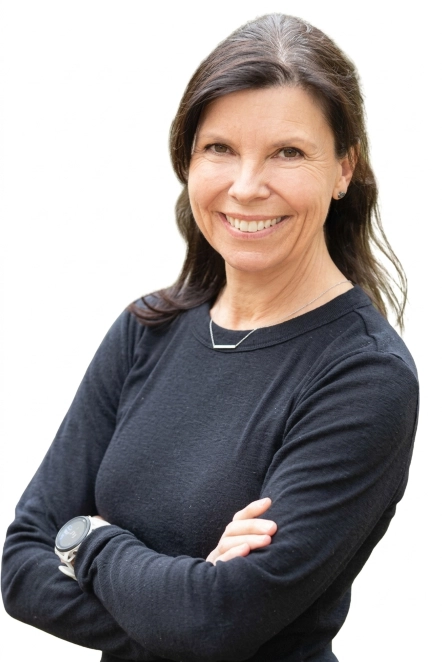
Guest Name: Amanda Harris
Guest Credentials: Exercise Physiologist, Certified Medical Exercise Specialist, REdCord Active Specialist, FMS, NKT
Discussion Details:
Amanda shares her perspective on helping people reconnect with their bodies, build strength in a sustainable way, and navigate the mental barriers that often show up alongside physical ones. We discuss how movement, mindset, and consistency work together to create long-term change.
In this conversation we discuss:
- Why chronic pain often returns even after treatment
- The difference between acute injury and long-term movement problems
- How fear of movement can keep people stuck in pain cycles
- Why pain-free movement is key to retraining the nervous system
- How breathing influences stability, movement, and back health
- What real progress looks like when recovering from chronic pain
This conversation is especially helpful for anyone who feels stuck between wanting to move more and feeling limited by pain, injury, or fear of making things worse.
Benefit of Watching:
- Understand why pain keeps coming back
- Learn the difference between treating symptoms vs. addressing underlying movement patterns.
- Reduce fear around movement
- Shift away from “don’t do this” thinking and toward confident, safe movement.
- Learn what real progress looks like
- Not perfection—less frequent flare-ups, lower intensity, shorter duration, and earlier awareness.
- Improve how your body moves
- Gain insight into motor control, stability, and how small changes can make a big impact.
- Use breathing to your advantage
- Discover how breath connects to your core, spine, and overall movement quality.
- Build long-term resilience
- Stop chasing quick fixes and start developing durability and confidence in your body.
- Take ownership of your recovery
- Walk away with a mindset of managing your body—not depending on someone else to “fix” it.
- Feel more connected to your body again
- Especially valuable if you’ve felt stuck, frustrated, or limited by chronic pain.
Address of guest’s business:
8619 Mayland Dr, Henrico, VA 23294
Website:
re-kinect.com
Dr. Camille Ronesi: Welcome to Beyond the Practice Spotlight Series. I’m Dr. Camille Ronesi and I’m sitting down with providers in the health and wellness space who are masters of their craft, but more importantly, they’re passionate about building strong communities that celebrate active, joyfilled, hopefully pain-free lifestyles. Join us. Welcome back to Beyond the Practice. Today’s guest is someone who has had a foundational impact on my path in movement and leadership and how I work with people. Amanda Harris is the owner and founder of Re-Kinect, which is a Richmond based practice focused on helping people actually reconnect with movement and return to the activities they love, especially those living with chronic pain or movement limitations. Amanda has been mentored by top surgeons, neurologists, manual medicine physic physicians, and physical therapists, collaborating them on every level you can imagine, all over the Mid-Atlantic over the past 25 years. This has given Amanda a unique perspective on how the human body should move and how that movement can also help heal. By identifying faulty movement patterns and using gentle movement and exercise to correct them, Amanda believes we can free ourselves from back pain and go on to live healthy, active lives. Not only that, Amanda has a master’s degree in exercise physiology from UVA, the University of Virginia. She is a certified medical exercise specialist through the medical exercise training institute in Houston, Texas, and is a certified Redcord active specialist through Redcord International. I also happen to know that you have done FMS, you’ve done neuroinetic therapy, you have done wellness coaching, you have done probably every continuing ed on core, back, hip, shoulder, you’ve you’ve done mentorship coaching, you’ve done leadership training. I think if there’s if there is a course out there, you happen to also your your life partner and cheerleader extraordinaire is also in the coaching industry. So conversations around your dinner table have a lot to do with how do people think, how do we talk to them, how do we listen to them, and how do we empower ourselves to be our best selves. So it’s it’s I’ve been in those conversations. It’s pretty phenomenal. Um, which brings me to the personal level, right? Amanda was one of my very first bosses as a profession as a as a professional personal trainer. Uh, now that you were a mentor, you pushed me in ways that nobody else did. I was this young kid who thought I was super special and super intelligent and was really too I was really too big for my own britches. And to this day, I have a little Jimmy Cricut in my head named Amanda Harris that says, “Let’s think of a better way to ask that question.” And it has truly it got me through grad school without getting in too much trouble. I got in some trouble, but probably not as much as I would have if I didn’t have my my mentor in the background going maybe someone wants to hear that a different way so they actually answer you. Me a lot of credit there.
Amanda Harris: Yeah. Well, you also helped provide you made sure that myself and the rest of our team had access to Gray Cook’s functional movement systems. you got us access to all of that wellness coaching, the core coaching, all of those things that created crucial foundational skills for leadership, communication, and coaching. Uh, your influence has shaped how I ask questions, how I engage with people, and also how I guide people through challenging situations, which makes sense in the physical therapy clinic space. So, I am very excited today to introduce the rest of Richmond community who doesn’t know about you to Amanda Harris. Uh, and we’re going to talk about all the things, the mentorship, the movement, and what it takes to actually help people reclaim their bodies and their lives.
Dr. Camille Ronesi: Yeah. How’d I do? Did we catch everything?
Amanda Harris: Oh, that was amazing. You made me sound really good.
Dr. Camille Ronesi: You are really good. You’re high now. Are that’s where you set them for me. So touche.
Amanda Harris: Yeah. Well, you’ve clearly risen. So that that was not hard. I had I had great clay to work with there.
Dr. Camille Ronesi: Well, then then we’re a dynamic duo together. So, what I want to start with is I want you to to help us understand what really influenced you to get to reconnect to get you to what this space is. Now, I think there’s a really common through line through all of your education and training and personal experience. And I think what would be wonderful for us to know is is what is that through line? What got you here?
Amanda Harris: Oh, well the the through line really is my own journey with back pain. So when I was a senior in college, I had a horse related accident. Horse pulled a barnwall down on me. And um in that accident, I sprained a very big ligament between my pelvis and my lower back. And at the time, we didn’t know that. Um, all we knew was that nothing was broken because I was in a little tiny town, Lexington, Virginia, and although the girl who rescued me, thank God for her, um, took me to the emergency room after the accident, um, the doctor there, who was wonderful, you know, he he came in and said, “You’re this is a miracle that you have not broken any vertebrae.” Because the wall literally fell down on me and covered me from the shoulders down and she had to drag me out from under the wall. And you know, for any of your listeners who are curious, the horse was fine. Um, always the most important question.
Dr. Camille Ronesi: Yeah, everybody worries about the horse.
Amanda Harris: Horse was fine. Um, I was not fine. Anyway, uh, so after they looked me over and x-rayed me and the doctor came out and said, “Well, the good news is your back is not broken. You’re you’re really really fortunate.” Um, they basically gave me painkillers and muscle relaxers and told me to sit on the couch for two weeks, surf the couch for two weeks, lie on it, sit on it, just don’t move a lot, and then return to activity. There was no mention of physical therapy. I mean, this was the 1990s. I’m dating myself, but still. Um, there was no mention of physical therapy or slow rehab. Uh, and I was telling somebody the other day, I didn’t even think to ask the athletic trainer at my college. He would have been more than happy to help me rehabilitate, but you know, the doctor said two weeks and then return to activity. And that’s what I did. And I returned to weightlifting and teaching e group exercise, which back then we called it aerobics. Uh, and I returned to riding my horse and doing all the things that I once did. And you know, I got away with it for another year. And then I
Dr. Camille Ronesi: You strong.
Amanda Harris: I Yes, I was strong. I was fit. I was healthy. Um, but then about a year after that happened, when I got into graduate school, I started realizing that I was not okay. And I was having episodes where my back would just go into extreme spasm and I couldn’t stand up straight. And I went through a journey with that for probably three years, three years before I met uh a manual medicine physician, an osteopathic type physician who was able to help me out of those moments of crisis because up until then it was just lie in bed and hope that my back would calm down. Um and so he was able to intervene and help me and he taught me a lot. um sort of set the stage for what became the method that I still use today to help people get on the other side of back pain. But but it literally sort of set me on this crusade because I was a young active person that wanted to continue to be young and active and healthy and fit. And this back pain thing, it felt like it would sneak up on me when I was least expecting it. And I felt like that was wholly unfair, you know, and I go through 12 weeks of physical therapy after an episode like that. And they would pat me on the head and say, “Good job. You know, you hit all your marks. Everything’s good. Now go back and get as strong as you can.” And I’d go back to the gym. And within a week or two, I’d be back in the doctor’s office. It was so frustrating.
Dr. Camille Ronesi: Absolutely.
Amanda Harris: So, so yeah. So, I sort of wound up on this crusade of how am I going to solve this? And as I did that, of course, like whatever happens with somebody who’s like me and just keeps saying, “I’ve got to learn. I’ve got to learn. I’ve got to learn.” I started sort of amassing a following where I was working at the club company at the time, right? They people started to flock toward me. They were like, “You’re the girl to go to with back pain.” I was like, “Guys, I haven’t solved mine yet.” But but they still wanted to work with me because they knew I understood, you know, I I got where they were coming from. But anyway, that’s sort of what set the whole the whole thing off. And um I think that because I was going through my own thing and even to this day, I have gone through my own thing. Um I have so much empathy and understanding. And when people come to me and they say, “I’m gonna tell you something. You’re really weird. You’re going to think I’m really weird.” And I’ll go, “Probably not. Trust me. Been there, done that. Tell me.”
Dr. Camille Ronesi: Y Yeah. I couldn’t agree. That’s the true line. Yeah. I think I think that I mean the story of and and we all know you are not a physical therapist. Let’s be very clear because
Amanda Harris: No, I am not a physical therapist.
Dr. Camille Ronesi: No. Despite everyone going why aren’t you a physical therapist or the amount of
Amanda Harris: Yep. Nope. Probably wise.
Dr. Camille Ronesi: Um, but I think a lot of people end up in this field of that space of medicine and fitness because of that very story of like I kept hitting the wall over and over and over again with my own injury. I finally found people who gave me great advice. I started using that advice on the people I was coaching, got more curious, wanted to do more and more and more and that empathy piece becomes so huge. Uh, so it’s funny like I think back on, you know, you knew me back when and I knew you back when. We were before children, right? Neither of us had before any of us had kids. So, and I and I think back now on stuff that I did or said that was so well-meaning and so correct, but really tonedeaf or really not helpful to the person in the way that it could have been. And I’m curious if there are lessons you have learned in your many years of experience that have let you reflect on that and change how you approach people like any issue.
Amanda Harris: Well, yes. Um I think I think the I think I think the empathy piece is big. you know, if you have been through some stuff and um I I I do find that a lot and you probably do too where you meet somebody because you’ve been through your own stuff too, your own journey with your body, right? Um I think it’s okay for me to say that.
Dr. Camille Ronesi: Oh, yeah. No, the SI joint thing has been 25 years. Yeah.
Amanda Harris: Yeah. So, so when you’ve been through your own stuff, you have a lot more empathy for folks who are going through their own stuff. And um even though no two journeys are necessarily alike or even identical or or anything close to being that way, I think that um you you know it there’s that saying about walking a mile in someone else’s shoes, but if you’ve walked a mile in your own shoes that was hard enough, then you can appreciate that whatever somebody’s going through is significant to them. And I think um that was one of the things that I I can’t even remember how I learned it. Maybe I learned it by watching the expression on the other person’s face. If I thought somebody was selling themselves short or um quitting before they were ready, before they needed to quit, you know, I would I would sort of coach them on that. But I I think I’ve learned to be even softer about that and really make sure that I tell them how much I appreciate what they’re going through. And often people will try to discount it, right? They’ll say things like, “Well, you know, it’s not like I have cancer.” I I get that a lot like I I will have somebody who comes in and they’ll say I have a big healthy dose of perspective because I was in this waiting room and you know I was with a friend and the friend was going through cancer and there were all these people that were you know terminally ill and you know you’re looking at them and you’re thinking and I’m complaining about my back pain and I think what one of the things that that I learned very early on is appreciate people for their own journey and it’s not fair for you you know yes it’s a wonderful perspective is a wonderful thing it’s good to relate and say, “Oh, wow. I’m grateful that all I’m dealing with is back pain.” And then at the same time to acknowledge that’s significant in its own right. Like, let’s not discount it because it’s not a terminal disease. I mean, appreciate that you don’t have that, but but also let’s not discount it because it is something that is keeping you from living your best life. So, let’s let’s come at it from that angle. Do you know what I mean? So I think I guess what I’m saying is there there have been moments where as much as I have empathy, I had to learn to help people appreciate and for me to appreciate people’s own journey even if it wasn’t even close to mine. If it’s if they’ve got nagging aches and pains, we we have to meet them where they are and help them to get to the other side of it because it’s clearly impacting their lives or else they wouldn’t come to us.
Dr. Camille Ronesi: Right. So Right. Like everybody’s hard is hard. Like hard is hard. Hard is hard. Yeah.
Amanda Harris: Hard is hard is hard. And I I I do think that having p to me, I feel like having the perspective of just how hard it can be kind of helps put you back in reality of like you can work through this, you know? I think I wish I wish everybody could go spend time in inatient rehab or in an ER or wherever and not for the like what you have isn’t that bad compared to others, but but more of like what you have is finite. So maybe there will be an end to this and you are not guaranteed when that end is and how hard that ending is is in your control to an extent. So being having the perspective of of you can you can be in your heart and you can empower yourself to get to the next step. Let’s do this.
Amanda Harris: The other thing that I think I learned along the way kind of um jumping off of that point because that was a really good point is that um managing expectations is hugely important for both of us in our professions, right? Like to help people understand. So, so often um when when I get a new client, they’ve they’ve come out of a maybe a 12-week treatment in physical therapy or something like that and they they just feel like they’re not there yet or their pain keeps returning like mine did after physical therapy. They’ve had great therapy. It’s not the therapy’s fault. It’s that they’re now putting so much demand on their system that they’re back in pain. And so, they come to me and and they’ll say, “You can fix me, right?” or how many months will it take for me to be whole again? And so what I try to help people understand is that especially if you’re over the age of 35, I mean, that’s what research tells us. You’ve got structural changes in your back. It’s never going to go back to the way it was when you were 15, 18, 20, you know, like we we can’t we can’t turn back time and and make the spine the structure itself perfect again. But what we can do is teach you how to manage your body where it is right now. And and one of my big things is I want you to learn how to manage your body so that you can manage your body for a lifetime so you don’t have to keep coming back into treatment, right? Like let’s talk management instead of fixing because I’m not a mechanic and I can’t fix you. But you can learn to manage yourself. And I think that’s a huge turning point for a lot of folks that come to see me is they’re like, “Oh, I can be in charge of my care.” You know, I don’t have to depend on others all the time. I mean, yes, you still might want to see a practitioner here and there, right? Like, there’s nothing wrong with that, and we encourage that, but it’s it’s more like empowering these folks that, yeah, you can actually manage your own body in real time, and it’s absolutely necessary to do that, right?
Dr. Camille Ronesi: Yeah. people like I people like, “Oh, then this will never happen again.” I’m like, “Well, if any provider anywhere says, I guarantee this will never be a problem again, run.” Like run. Like one I one of the most critical lessons I think I learned and I feel like you kind of are in that same boat of like we I stopped saying the body is a machine, right? Like it’s not it’s not input equals output and then you just need to turn this wrench and tighten that belt. It is or it’s an organic material. It is a tree and every tree tells the story of how it grew.
Amanda Harris: Yes.
Dr. Camille Ronesi: Right. So we can’t we can’t go in and reshape how it grew but we can direct it towards where it’s going to go. And I think I think that softness in our coaching has really helped people feel empowered. And I think that’s really cool that that’s where your journey took you as well. Um I think when you live with pain you have to do that. My phrase is always um what you’re going to do is you’re going to have it’s going to happen less frequently when it does happen. It’s going to be less intense. It’s going to be duration and you’re going to recognize the signs before it starts.
Amanda Harris: Yes, exactly. That’s exactly what I say.
Dr. Camille Ronesi: That’s that’s awesome. That’s exactly what I say. Less frequency, lower intensity, shorter duration, and you’re going to know beforehand. It’s always going to be your thing.
Amanda Harris: Time to intervene.
Dr. Camille Ronesi: Yes. No, that’s beautiful. I love that. Yeah. And I think so you’ve used a lot of different education points to get you all of the skills to create your own model. So you have done stop Pilates, you’ve done red cord. I see the red cord hanging in the background. Uh you’ve done FMS stuff. So tell us first off explain red cord because I think that’s the number one one that people will have no idea what that is. Everyone has an idea of Pilates, but red cord looks like a very different piece of equipment.
Amanda Harris: Yeah. Well, that’s the apparatus. See, there’s a table under it, but you can kind of see there are ropes hanging there. Um, so it’s very difficult to explain. I’m just going to say that out of the gates. I joke that it’s a lot like chocolate. You have to experience it. It’s difficult to describe, but I’ll attempt to describe it. So, if anybody’s familiar with TRX, which is a suspension equipment, right, where you’ve got um ropes that are have an attachment point into the ceiling and then you’re doing exercises on those ropes. So the ropes create an unstable exercise environment which causes uh your body to use its own autopilot. So its own reflexes and reactivity to steady you in that exercise environment. So if you’re familiar with TRX, we in the red cord world say that that red cord is like TRX with a PhD. And the reason we say that is that uh red cord was developed to help people return from pain specifically back pain actually originally. It’s a it’s out of Norway. It’s an apparatus that comes out of Norway. And in addition to the unstable exercise environment that’s created by these ropes and we use more than one set of ropes in red cord work like at least on the on the postrehab side. Um we also use a series of slings and bunggees. These are like bungee cords like you would attach something to your car using, you know. Um, and the slings are just webbing slings. So, it’s not terribly high tech. We we actually say it’s low tech, high knowledge. But, but learning how to use the offloading and the unstable exercise environment is where the rubber meets the road. And so, what we want to do as we’re bringing somebody back from a painful situation, whether it’s back pain, hip pain, knee pain, shoulder pain, it doesn’t really matter. um we choose the exercise that we think is going to best influence the body to learn a better way to move. And the idea is we offload the body weight. So we we take some of your body weight away similar to the way water takes body weight away. So we offload some of the body weight to lower the challenge level to the nervous system. So we try to make the exercise environment easier, gentler, the exercise itself easier for you to perform, but the ropes still create that unstable exercise environment that trips your autopilot. So it forces your brain to make those quick split-second decisions that you can’t consciously make on your own. So we’re we’re really tapping into your nervous system to help you learn how to move better in a pain-free way. And the thing that I loved about Red Cord, which I’ve carried through to my own methods that I use in my online course and all my other stuff too, um, off of Red Cord is that the whole point is pain-free exercise. And that that really does differentiate what I do from what you do, Camille, because um, in the physical therapy world, you all can work with pain. You can work with acute patients. You can work with folks who are actively in pain. I don’t want pain in here. Now, that doesn’t mean that I don’t see pain. I see very low levels of pain. So like below a five out of 10. Um if they’re above a five out of 10, I can’t see them. I won’t touch them. I could make them worse. And that’s the last thing I am interested in doing is making somebody worse. But what we do on Redcord is we make sure that every single exercise is done in a pain-free range of motion. And I do that in my non-readcourt exercises as well, which is exactly what helps to retrain the nervous system to move painfree. So that that’s so red cord really gave me a huge boost when I was developing my own methods because you know I have clients all over the United States that I see online or in some of my online programs and courses and I can’t put them on this but but I have ways of still stimulating the nervous system and getting them there. And that that was what I learned from these guys.
Dr. Camille Ronesi: Yeah. Yeah. And I guess that’s kind of one of my questions is, you know, we certainly have some of our specialty equipment, right? Like I have a couple of pieces. I really minimize it partially because everything is so stupid expensive.
Amanda Harris: Yes. But I also not buy it.
Dr. Camille Ronesi: Yeah. It’s a And it’s like But my bigger thing is I always think about, you know, those the one thing that has been true in exercise since the dawn of time is specificity, right? of like how do you take something highly highly specific and make sure it fits their general needs. Um so you look at things like red cord which sounds fantastic. It sounds like a way people can access basically a lot of the gains of aquatic therapy without getting in a pool for particular things right without having to deal with a pool. Um but certainly nobody has it at home. They’re not going to set up rigging in their own house. That would be a questionable practice. So, how how are like what how do you take someone out of the cords and onto the floor or into their day? Like what is that transition?
Amanda Harris: Okay. So, um long before the whole COVID shutdown happened, I was trying to figure that out, but the like so many other people, the COVID shutdown forced my hand and I had to get really good at doing what I do on red cord without red cord. Um, and so I would say I learned a lot about about what needs to happen for people to continue to move forward off the ropes. But I was already doing some of that because even in my red cord courses, the the PTs that I trained under in red cord would say, “Well, you know, basically you’ve jumpst started the nervous system here, so you don’t really need to give them home exercises.” It’s like I I never could reconcile that because it’s in my nature to believe that you need to practice patterns to really get them embodied.
Dr. Camille Ronesi: Well, that’s motor control, right? You have to practice frequently.
Amanda Harris: Exactly. And and I think the the red cord PTs were like, well, we’re going to see people for three visits a week for 12 weeks and then, you know, and so it was a it was more of a standard PT model, even though they weren’t doing hour-long sessions on it. they were, you know, really stimulating that nervous system on red cord over and over again. My model was always different. I wanted to see people in here once a week and then let them practice on their own. Um, mainly because I want to build independence and self self efficacy as we say in the coaching world, right? Like I want people to be able to depend on themselves and be confident in their own abilities to manage their situation. So, I’ve always believed in giving home exercises, but long answer to your short question, what I had to do was um literally be able to kind of copy the exercise pattern, at least the goal of the exercise in a home version that didn’t require a lot of equipment or required basic equipment like a band or a exercise ball or something and get them to understand how to do that pattern in a pain-free way. And often I give people several different troubleshooting thoughts. You know, if this hurts, try this. If this hurts, try that. Um, if it keeps hurting, omit it entirely because because like I said, I don’t I don’t work in pain. I don’t want my people exercising in pain. So, so I had to kind of learn how to do that. But the way that I use red cord now, which is a little different than I did prior to the whole COVID situation, um I use it now, I won’t say as a last resort, but I use it when I feel like I need a big up level. So, if I’ve got somebody who’s not responding as well as I would like to the exercises that I’ve given them to work on at home, because I’m always aware of that because, you know, people ask me, they’re like, I I can’t I don’t have one of these. What do I do at home? Um, right. And so I um I I learned very quickly to just say to start using it as more like a um I kind of joke about this, but almost like jumper cables. So I think of it as I can jumpstart your nervous system a little bit, your your motor learning because that’s what it is. So, I can jump start how quickly your nervous system is selecting and coordinating the various muscles you need to do this pain-free movement. And then I’m going to take you right off those ropes and get you to practice this exercise with the same, you know, goal in mind, the same objective and see if you can do it painfree now. Like, what do we need to do to make you do that painree now? So, so really now I just use it as sort of like jumper cables. I use it when I have somebody who’s got a stubborn pattern that they just can’t they can’t seem to get on their own. I I just don’t use it like I used to. I used to use it for everything because it’s fun. You know, people love it. It’s fun. It’s awesome. Um it can be a little bit addictive because it it feels good. And so I but I use it very differently now. It’s more it’s more of a stimulus to get them where they need to be.
Dr. Camille Ronesi: It’s more like um it’s a it’s a training tool. Yeah. You know, yeah. It’s like I want you to feel this here so that you can then accomplish this there. Yeah. You know, I think you see in the SFMA world. So, for those who don’t know, like there’s FMS, which is the functional movement screen system, and then you go up into selective functional movement, and that’s more like the pain based piece, right? That’s the the assessment piece. And when you get into the corrective exercise theory of that, um, it’s very, it’s the like recreate it the way it should feel.
Amanda Harris: Yes.
Dr. Camille Ronesi: And get familiar with the difference between the way it should feel and the way that you are used to it feeling.
Amanda Harris: Yes. Exactly.
Dr. Camille Ronesi: And it’s it’s it’s retrain the motor pattern over and over and over again until your brain selects that movement instead of the one that you already knew.
Amanda Harris: Exactly.
Dr. Camille Ronesi: which can be quite empowering where I always get stymied. It’s it’s it’s um create is making sure that the coaching and the training and the exercise selection does not create fear, right? especially fear of intensity and fear of weight because I think I don’t know if you went through this but certainly in the back pain hip lumbbo pelvic hip instability journey there’s at some point we’re like don’t do anything like give it up give up running like give up weightlifting give it all up stop doing it and I got to tell you it didn’t it made it worse yes I got worse yes um and I got really fearful of everything and I got really frustrated and I lost lost my identity. And this was also like baby time. So, it was like everything kind of fell apart. And then I got to the other side and I was like, I don’t want to do this. Like, this sucks. Like, I want to get to moving again. And it feels better. So, I guess the, you know, how do how do you how do you navigate that of like, okay, like clamshells are great, bridges are great, bird dogs are great, I want to go ride my mountain bike for 50 miles. Uhhuh. How do you how do you get to intensity from this like without fear-based decision-m?
Amanda Harris: So, so I think those are almost two separate people at least from what I encountered, right? Like you’ve got your gladiators that are like, “All right, you got me doing these bridges and you’ve got me doing these basic, you know, lower back stability exercises and when can I start training for the next marathon?” And you’re like, “All right, well, slow. Let’s slow down. I’m going to slow you down so that you can get the right patterning to your point and then I can speed you up again. But you got to you got to slow down.” And then then you’ve got the person who is fearful and like every you know and I’m watching their face all the time. I mean, that’s something I’ve learned to do from I don’t know how far back. And, you know, we start seeing that expression of, “I don’t know about this.” Or they sometimes they’ll even say, “Amanda, I I don’t know about this.” And so, I’ll say, “Okay, let’s back up.” And and we just go back like because to me, um, a part of this journey, a big part of this journey for for that person is to rebuild the confidence in their body. They need to practice pain-free patterns where they are like where they’re comfortable and capable so that we can build that next pattern. Um, and so, so that person I might go a little slower with and we talk about it. We talk about, you know, I can tell you this is making you apprehensive. Oh yes, it’s making me very apprehensive. Okay. So then let’s do this which might be a step down or two steps down until we build your confidence so that we can then do this next step. So so it’s a conversation that’s kind of ongoing and and honestly usually in a session or two we get past that fearful thing and and I get the the voxer or the text message of guess what I did you know it’s like so it just makes my day and you know the other people is is similar. It’s like, you know, you want to ride your, you know, you want to do 50 mileer on your mountain bike. Okay. But we’re stuck right here doing these lower back and pelvic stability exercises for now so that in a few months we can get you back on your bike. And then when we get you back on your bike, here’s what it needs to look like. So, we have to have that conversation, too, which they don’t like. But the whole point is, and I always tell them, this is a long game. This is not a quick fix. This is a long game. And the whole point is so that you can get on that bike and do your 50 miles. And it may take you a few months to get there to where you can start to train that hard. But you’re putting in the time now so that you can do that later because let me tell you, if you rush that, if you ignore me and you rush that, we’re going to be right back to square one, right? And you’re just creating a loop. And let’s break the pattern and make it right, you know? And and most of my gladiators are okay with that. Like they’ll let me slow them down because they trust me. And that that’s the thing, right? Like they got to trust me. And if they don’t trust me, they’re not gonna listen to me, right? Most of them will let me slow them down because they can see the results. They can feel the difference in their bodies and they’re like, “Okay, you know, it doesn’t mean they don’t ask me, you know, when can I start my training?”
Dr. Camille Ronesi: Like, “Well, okay.” Well, and I think maybe maybe where maybe where I can land your your expertise in particular is you are not in the tissue healing time frame that I often have to live in, right? Like when I’m talking about pain with people, yes, I because I share such a similar ethos as you, like there is a lot of just I have pain in general, like I just want to move again and we teach them how to move again. Yeah. But I get the also like I injured this, I had this surgery, I had that. Like we’re actually talking about tissue healing time frames, which is a very specific calculus. You’re not dealing with the people who had an ankle sprain two weeks ago and they need to heal tissue. You’re talking about somebody who had an ankle sprain 15 years ago and they just they got a stiff ankle now or an unstable ankle now and it’s affecting their back.
Amanda Harris: Yes. And so I often tell people actually in my um I do online trainings. I give um free online trainings every few weeks. I’m I’m trying to get on a trying to get on a cycle of like at least once a month with them now. But um I give these online trainings and we talk about that what the difference is between acute and chronic. Um in my world I I work with more subacute and chronic which means the tissue is stable. So I talk about that like the reason I don’t want you in the acute phase is that your tissue is still vulnerable because you’re in the healing process. I want to see you when your tissue is stable so that there’s not a big question about what we’re doing and whether the exercise is making you is is going to hurt you because it’s not like we’re in that more chronic element. And so if you have pain when you’re working through my exercises, I know it’s not because we’ve pushed healing tissue too far. I know it’s because your mechanics are off. So, let’s back it up and let’s knock back the challenge and get you using the right muscles in the right order in the right amount and move you forward again. So, it it’s it’s helpful to me because I know I’m not doing more damage. You know what I mean? Like I that I I don’t that’s why when people are like, you know, don’t you sort of wish that people thought you were a physical therapist? I’m like, absolutely not. I don’t want to play down there. I don’t like that phase. I I like this phase. So yeah, it’s yeah, it’s um to me, you know, we were both corrective exercise specialists before we were anything else, I think. And I think there was always that dance of like, well, we don’t treat pain, right? We don’t treat pain, but that’s bologoney because everybody has pain, right? Like pain like pain becomes this big four-letter word. It has a lot of fear around it. It has a lot of anxiety around it. It has all these problems. And I think and we know even like basic like going for a walk can alleviate a lot of pain you know like sometimes depends like like just just moving can a lot of times change pain for the positive. So it’s it’s the exercise matters less than the actual act of being with someone who’s good at guiding you through it. That said the exercises themselves become very very specific to that motor patterning and retraining the system. And I think that’s you’ve been able to pull so much together from so many specialty fields. Um you just don’t put your hands on people.
Dr. Camille Ronesi: Right. Right. You don’t you don’t you don’t manage. To me it was always like I can’t touch your joints. I can’t touch your nerves. I can’t touch your I can’t touch your boo boos. Now as a DPT I can. And that’s that’s where our intersection is really beautiful because I can touch the joints. You don’t touch the joints. But at some point, I need them to not live in fear of just getting out and doing it. And that may or may not be in my clinic, but it can be with someone who has a personal trainer coach lens. I know you’re not a personal trainer, but you have this lens that is the let’s just let’s just exercise. Let’s just exercise, but it’s going to be good and specific and with a lot of uh empathy.
Amanda Harris: Yeah. Yeah. And I don’t even think about it as let’s just exercise because to me that feels very fitnessy and I don’t yeah in my role I’m not after fitness. And um it’s funny because I had somebody once accused me of not liking fitness or not liking strength training and I was like hold up. Let’s take it back. That is not it at all. As a matter of fact, I strength train. I cardio train. You know, like I do all those things. But the point is, in order to get there with healthy movement, we have to start way back here. We have to start with making your stiff places more mobile. We have to start with getting control of your lower back again and getting control of all the muscles around your pelvis, especially the ones around the back and the sides. We got to get all that back online and get that operating really well. And then once you’re moving well again, we put strength on you. and and I’ve started doing a little bit of strength training with people, more functional strength training, more you know, compound type exercises because what I want them to understand is that is a necessary component. Like I’m always sad if somebody leaves here after they feel like their pelvic stability has really gone up and their lower back stability has really gone up and they’re like, “Okay, I’m just going to go back to life now.” It’s like, well, hold on because you you need the strength to develop what I think of as durability and resilience. Durability because it makes you more resistant to those setbacks we were talking about earlier with back pain and resilience because it keeps you bouncing back quicker if you do have a setback when you do have a setback because they’re going to happen. But the the strength training gives you that durability and resilience so that you can move forward in confidence and know that you’re not breaking your body. I mean, to me, that’s hugely important. But but I don’t think of it as teaching fitness because I’m not doing boot camps in here. I’m not doing hit workouts or anything like that. It’s it’s more about making sure that we’re taking that healthy movement and teaching you how to correctly load your body with not just resistance but with direction and with um instability like unstable surfaces, balls, bosus, you know, whatever we can find so that you’re prepared to do whatever it is you want to do next and that you like go into fitness training after that. Does that make sense? Like training?
Dr. Camille Ronesi: No, I Yeah, I think Yeah, it was always I never I was never the I will get you swole. I’m not I’m not gonna help you lose weight. I’m not going to help you get bigger. I don’t I’m not I’m not interested.
Amanda Harris: Well, yeah. You and I used to talk about training fit people to be more fit is really quite boring for us. Yeah, absolutely. Not very interesting to you and me.
Dr. Camille Ronesi: No, it’s not. Like it’s it’s I don’t It involves understanding algorithms. like involves understand like getting really nerdy about like the German 10 by10 system or blahy blahy blahy blah. I’m just like I’ll let you guys be the nerds on that one. I will be on why did the joint roll in that direction instead of this direction and why did they hold their breath while they were doing it. Um it’s so Yeah, it’s so funny to to know that about yourself when everything’s all personal trainers are stand over the treadmill and yell at them, right? I was never interested in that.
Amanda Harris: No, it was no and not a fun game.
Dr. Camille Ronesi: So, I I was gonna ask a really good question, but it’s gone now, but it’ll come back to me. Uh, but I know we’re getting kind of close to the end of our time together, and I really did want to ask this one question is like, if someone is feeling disconnected from their body right now, what would you want them to remember as they begin rebuilding trust in themselves?
Amanda Harris: I’m going to point to the breath. And a lot of people think that’s boring, but I love that you cracked a smile because I think you’re with me on this. Um, I have I believe and I have witnessed that most modern humans don’t breathe well. We just don’t breathe well. We’ve sort of forgotten how to breathe. And a lot of us are now knowledge workers. We’re looking at screens like this a lot of the day. And when you’re looking at a screen, it’s not it doesn’t create much of an oxygen demand. And so you start to you start to breathe less and not well. And then you take that into Costco to pick up that big pallet of water, you know, or you take that into your high impact yard work because the sun popped out on Saturday, right? I mean, you you take the poor breathing techniques into high demand tasks and you set yourself up for failure. And so I think um a lot of what we do here early on in the first couple of se sessions is to improve how you breathe and use the way you breathe to help you connect with your deep lower back support system. And as you restore that connection and I kind of have a way of kind of coaching people through this. As you restore that connection, you literally start to reconnect. Which is the whole reason I named my practice what I named it because um I even had somebody in here on Friday who said, “Oh my goodness, you know, I was moving like in this one exercise that I had given him for home exercise.” And he’d come back a week later. He said, “I I realized I was moving deliberately trying to compress my abdominals through my breath and then moving the leg from my leg.” And he said it was like there was there was four inches of me that was completely empty space that wasn’t working at all. And by the end of this coaching that we went through on Friday, he said, “I can feel how it’s all connected and it all is this seamless transition from my stability, my compression to moving the leg.” And you know, who knew that your core, that your deep abdominals could influence both control and movement at the same time? And I was like, yes. You know, like you got it. You know, that’s awesome. But but that to me is I think the the biggest thing people can do right now is start to breathe like in through the nose, blowing out through the mouth, and start to feel how that influences all the way down into your abdomen. You know, we’re taught that the breathing system stops at the lungs and the diaphragm. It doesn’t. It goes all the way down. And so, if you can learn how to use your breath differently, then you will start to actually connect your body as a whole. And that’s first step.
Dr. Camille Ronesi: I couldn’t agree more. We, you know, experienced that both personally, um, you know, even coming out of PT school. And I went to go see a pelvic floor therapist and they gave me a tummy rub. you know, like I put like I got a tummy rub. I got a visceral release and that literally we’re talking after PT school. And I was like, “That’s a diaphragmatic bath.” She goes, “Yeah.” She’s like, “You haven’t taken a diaphragmatic breath the entire time I’ve known you.” And I was like, “Oh.” And it just completely unlocked my back in a way that I have never been able to achieve up to that point, knowing all the stuff we’ve done going through back pain and all the things we’ve done. I think the more you do or you know and I’m working with patients now where it’s like do you realize you’ve been gripping your abs your entire life and as soon as we release that they’re like oh my god I had no idea that my chest my sternum was supposed to move supposed to move. We screwed up in the early 2000s. I am so sorry. We spent so much time teaching you to belly breathe and we screwed up. Like let’s unte everything I taught you 25 years ago. So sorry.
Amanda Harris: That’s probably where I apologize. I’m like, we kind of screwed up in the late 90s, early 2000s and said, “Brace, brace, brace, brace.” And now we’re telling you, suck in.
Dr. Camille Ronesi: Yeah. Suck it in. Tighten up. Hold your back in neutral always. And like I think giving yourself grace. And I think that’s exactly what you’re saying is like give yourself grace to move and breathe and flow. Well, Amanda, thank you so much for sharing your experiences. your your perspectives are just always just so beautiful and they give us permission to enjoy our own movement and I think that’s really great. I think you have this ability to zoom out and see a whole person and not just their pain or their poor fitness or whatever. You really just care about them getting to do whatever they want to do. Uh garden, pick up the kids, go for a run. Like you just want people to feel empowered and I I think we all really appreciate that. I personally am forever grateful to you for the influence you’ve had on my career to this day for the rest of my life. It will always be something I know that I’ve got you uh in the back of my head and on the phone just to say, “Hey, I have ideas. What do you think?” Um, and you’ve never been scared to tell me what you think.
Amanda Harris: No, tend to be pretty direct about that, but thank you. That just warms my heart. I really appreciate that. Always enjoy.
Dr. Camille Ronesi: Well, thank you. I think that we’re going to continue to do beautiful things in this city together. And I hope that for those of you who are listening, if you are scared to move, if you feel ready to move and it just kind of hurts, I think Amanda is a wonderful person to go see. I would I would send myself to her anytime. So, if I can send if I’m willing to send myself to her and I’m the pickiest person in town, you can go to. Well, enjoy a wonderful day. This is Beyond the Practice. I will see you soon.
Amanda Harris: I’ll see you soon. Heat.